
Autism Feelings: The Hope of Unlocking My Anxiety and Depression (and the Fear of Failing to Do So), Part One
In which ADHD stops by to complicate matters

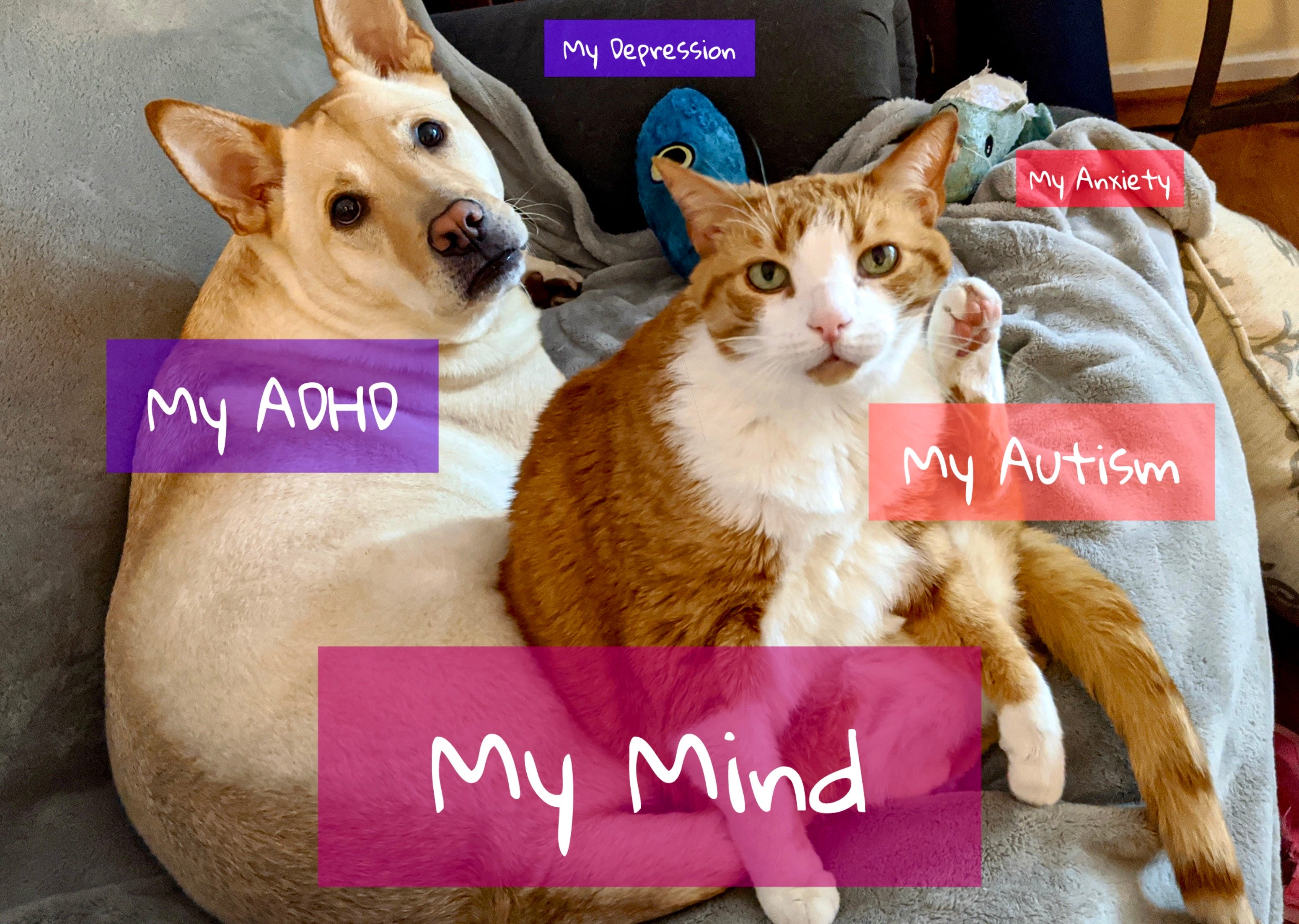
When I was pretty sure I had autism but hadn’t yet received my professional diagnosis,
I had a window of optimism
regarding my ongoing, unrelenting depression and anxiety.
Series Note
This essay is part of an ongoing series in which I explore each of the feelings that washed over me when I received my diagnosis of Autism Spectrum Disorder (ASD) at forty two.

I tested that optimism on my then psychiatrist, who I later replaced. I didn’t replace her for any single, awful offense. I replaced her for being a nothing-if-not-consistent B-minus psychiatrist.
“I’ve been wondering,” I said. “If I do go through with this testing and it turns out…”
She smiled, placidly, like Janice, the Muppet who plays lead guitar for Dr. Teeth and the Electric Mayhem.

“… if it turns out I do have autism,” I said, “would that diagnosis have any impact on my medication? Like, do some antidepressants and antianxiety meds work better for people with autism?”
“Well,” she said, “it will be good information to have. But whether or not a person’s depression or anxiety is correlated to autism, it’s the symptoms themselves we’re treating, ultimately. As far as finding the right combination of medications for you… Well, our approach wouldn’t change with an autism diagnosis.”
“Huh,” I said.
I’m paraphrasing a conversation from months ago. I could be misremembering, but that was my takeaway. “No, sorry, dude. Knowing that you have (or do not have) autism is not going to unlock any obvious new medication avenues to treat your anxiety and depression.”
Or maybe I misheard? Or maybe I misremembered? Or maybe she was wrong? Wrongish? Incurious?
A quick search tells me she was probably correct. I am at least reassured knowing that I’m not the first person to ask this question. Researchers are researching it. Maybe someday the answer will be, “Yes, it’s called Sensapram. We don’t fully understand the mechanism, but it converts the sound of others chewing into collectible figurines.”
Soon after broaching the subject with my B- psychiatrist, I would have my autism diagnosis. And soon after that, I would move on to an A+ psychiatrist. The A+ psychiatrist’s feelings on the matter were (and are) the same (mostly) as those of the B- psychiatrist. She didn’t pull rank or anything like that. She just gave me a more detailed answer and was better about communicating the way ahead.
Assuming your psychiatrist is certified and knowledgeable as a baseline of competency, the key differences between an A+ and a B- may be subtle but they are important. To earn an A+ from me, The Patient, my psychiatrist needs to:
Ask a lot of questions
Take time in discussion
Communicate proactively with other providers in my life
Remember to fill prescriptions and plan ahead for trips out of town
That’s it. My current A+ psychiatrist has not found the perfect meds for me or vanquished my depression and anxiety. I don’t require that for an A+. I just require a clear plan to get closer to that, a passion for continuing education, and a “detective” vibe—someone who enjoys solving puzzles rather than someone who is annoyed by them.
Anyway, back when the B- psychiatrist told me an autism diagnosis wasn’t a golden ticket to a bespoke suite of anxiety and depression meds, I suppose I told myself that she was probably some combination of wrong and cautious. I had already started to wonder whether there was an A+ psychiatrist somewhere nearby who was taking new clients. Dr. B- had made a simple case with sound-enough reasoning, but I had doubt for doubt’s sake. Interestingly, my mistrust of Dr. B- gave me hope, which, briefly, cheered me up.
And as I was cognitive-dissonancing that
I began to quietly move a few of my hope eggs from my psychiatry basket into my therapy basket.
My thinking was something like this:
Okay, so if
autism diagnosis + psychiatry ≠ end of anxiety & depression
Then perhaps
autism diagnosis + discussion of diagnosis in talk therapy = end of anxiety & depression
Or perhaps
autism diagnosis + blogging my related feelings = end of anxiety & depression
Maybe?
Yeah?
Anybody?
Here’s the thing
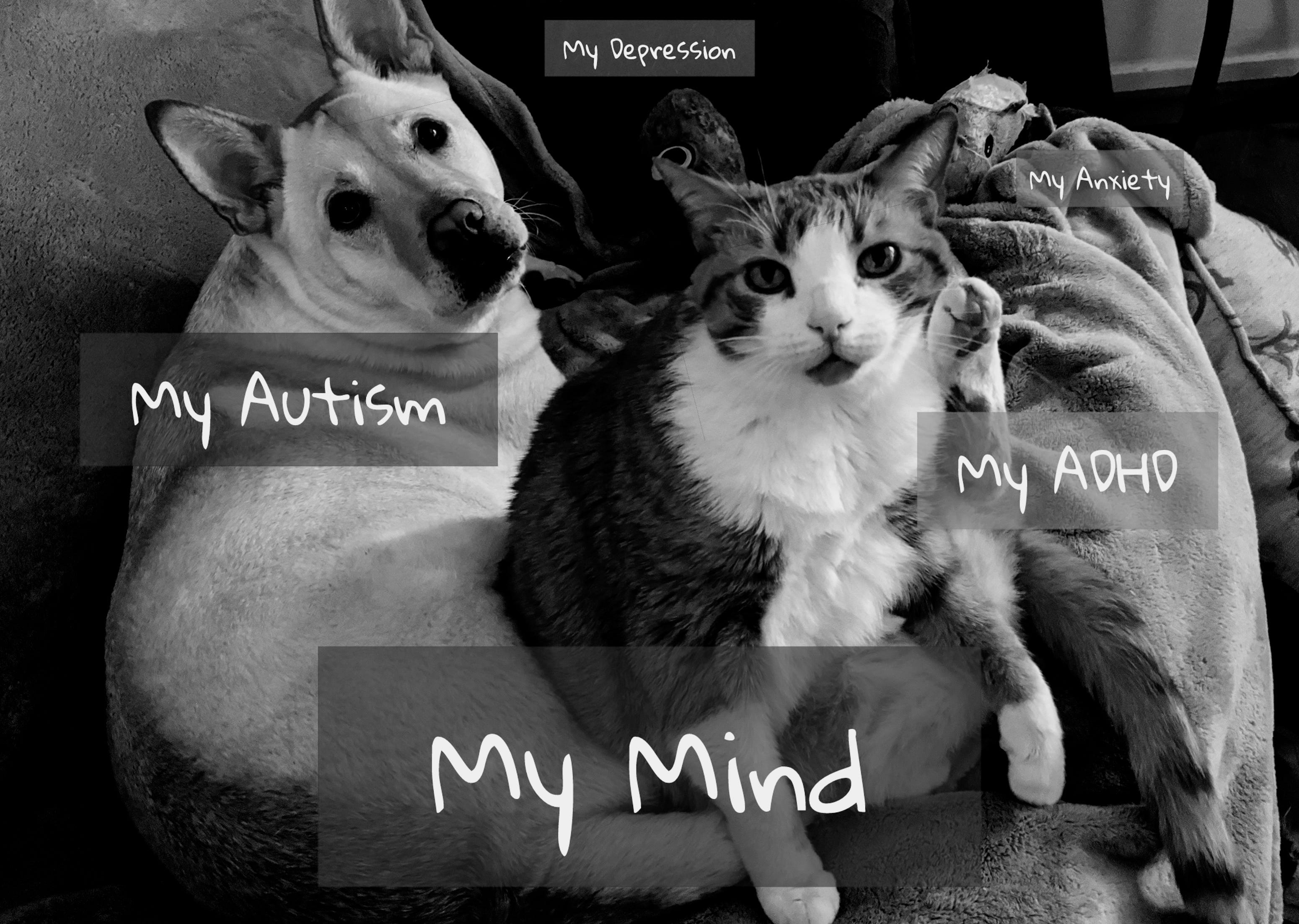
It’s been about eight months since my twinsies diagnoses of ASD and ADHD1. And, wouldn’t you know it, I am still depressed. And I am still anxious. I’ve been up and down and up again on different medications and have transitioned to Dr. A+, yet both conditions are as bad as they’ve ever been. Along the way, I’ve had little moments of optimism that have revived me. I’ve written about them here. Several times over the past few months, I’ve perked up. More than once, I’ve clung on to the latest “maybe this will be the thing that helps me turn the corner,” and I’ve been moved enough to write about that latest thing in some form or another.
Some days, I believe that if I can just more deeply understand my autism or more fully come to terms with it, then the mostly manageable forever fires of anxiety and depression will begin to die down. Most days, though, I don’t believe that. Most days2, I remember that depression and anxiety are a pair of those novelty birthday candles that sizzle and sizzle while you blow and blow on them like a sad dope.
So, here I sit, metaphorically speaking, alone at my dining room table, wearing my special hat, striving to more deeply understand my autism, and enduring perpetual defeat by novelty candles at an unwanted surprise party, which, for some reason, I keep throwing for myself. I sit here thinking my funny little thoughts. I mean, I don’t really need joy. What if I threw the cake into the middle of the ocean? No. No. Too complicated. I would need boat. Maybe just. Lie down for a while. Just. If I could put my head down. Just. For a little while.”
Remember how I said I’d begun to quietly move a few of my hope eggs from my psychiatry basket into my therapy basket?
Well, to put it simply, progress in therapy has been slow going too. Sometimes, it’s has been going sideways or slightly backward.
But I’d like to explore that in its own essay in the context of something else I read recently. So let’s consider this the end of part one of a two-part post.
A Glimpse of Part Two
So far, my diagnosis-blogging journey has been focused on my autism. I’ve been curious about my ADHD diagnosis, but until recently it’s felt like a bit of an afterthought. Only in the past few weeks have I been reading about the experience of having “AuDHD” (a term I’m not totally enamored of but am willing to sprinkle in here and there for color and context).
Next time, I’d like to use a post by carmen_authenticallyadhd as a guide.

When I first read it, I had one of those little sparks of optimism. Maybe, I thought, if I keep my ADHD diagnosis front and center, I’ll have some fresh, concrete things to work on in therapy. Maybe this is something like the open door I’ve been looking for. Maybe. But then I start to have feelings. Big feelings.
In the next Autism Feelings installment, we’ll go stand next to that open door. We’ll perseverate on it and wonder. We’ll consider its door-ness. We’ll… um… sorry, what?
It’s actually slightly more complicated than this. The doctor who conducted my tests gave me an ASD Type 1 diagnosis but stopped short of also diagnosing me with ADHD at the time. She cited a lack of childhood data. I gave her my best attempt at a self report, but my parents are dead, so. However, she added, “But if it walks like a duck and it talks like a duck…” Subsequently, after working with my A+ psychiatrist for several months, she has confirmed. Her diagnosis at present is ADHD Unspecified Type. (You know, plus all the other stuff.)
This is starting to sound like a Mountain Goats song…